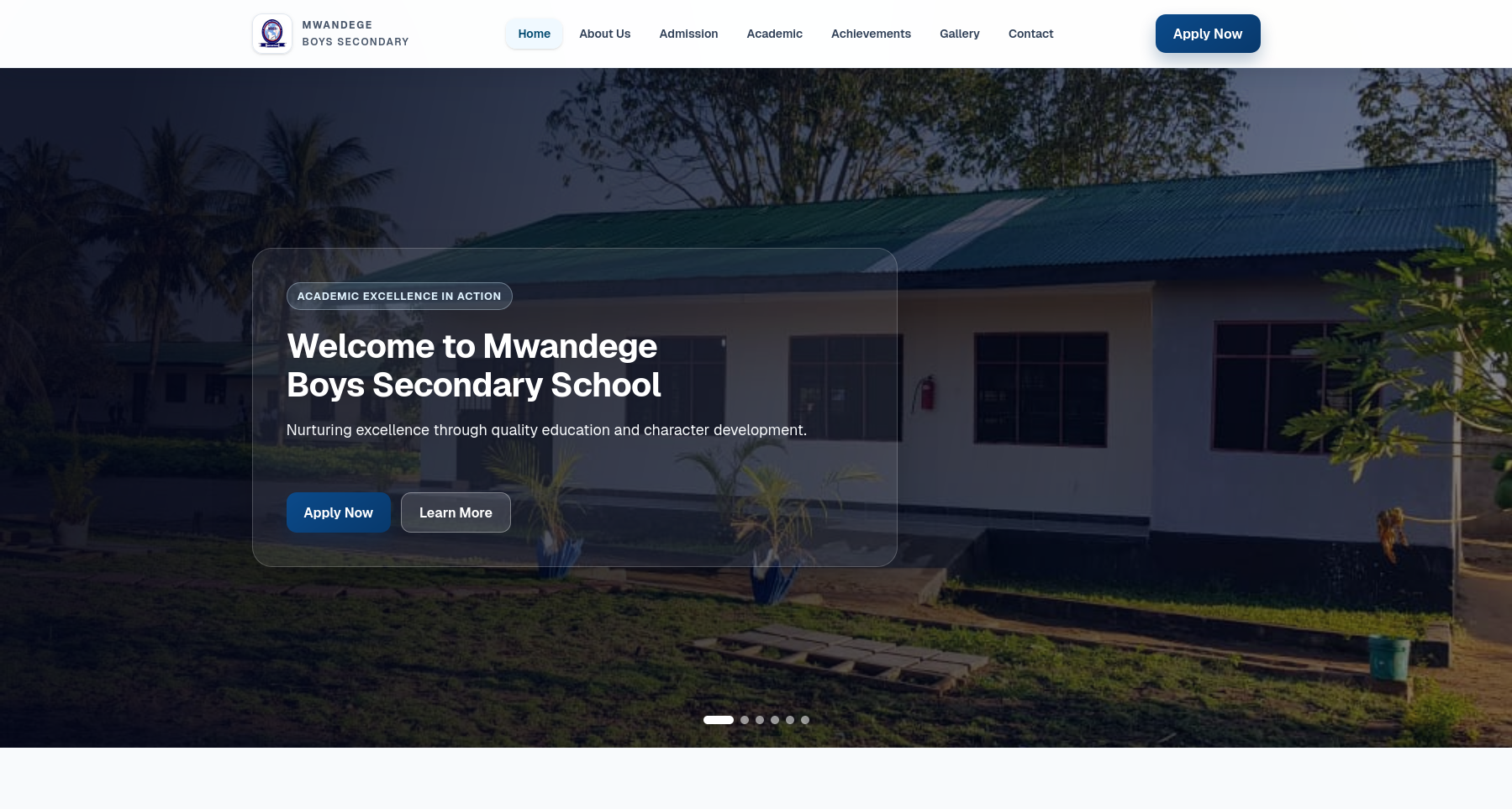
There's a very specific kind of pain that comes from visiting your old school's website as someone who now knows how to build websites. You scroll through it slowly, wincing. Outdated layout, broken links, text that looks like it was last touched in 2014. You close the tab. Then you open it again. Then you think — I could fix this.
That's exactly how this project started. No grand plan, no brief, no client. Just me, some free time, and a genuine "why not?" energy.
The original site: a crime against the internet
I won't be too harsh — it worked, technically. But "technically works" is a pretty low bar. The design felt like it hadn't been touched in years, the mobile experience was rough, and navigating to basic information like contact details or the school calendar felt like a scavenger hunt. As someone who's spent time learning modern web development, it was hard to unsee.
The moment I knew I had to do something: I tried to find the school's phone number on mobile. Three taps and a horizontal scroll later — still nothing.
Building the revamp
I kept the stack simple and modern. Next.js for the framework since it gives me clean routing and great performance out of the box, and Tailwind CSS for styling because I can move fast without fighting CSS specificity battles.
Stack used:
- Next.js
- Tailwind CSS
- Web3Forms
- Netlify
- Vercel
The goal wasn't to just make it prettier — it was to make it actually useful. Cleaner navigation, proper mobile layout, readable typography, and a contact form that actually works. Nothing revolutionary, just the basics done right.
The Netlify plot twist (nobody warned me about this)
Here's where things got interesting. I deployed to Netlify on their free plan — straightforward enough, right? What I didn't know was that as of September 4, 2025, new accounts now have a 300 credit usage limit per month, which covers build minutes and other usage. My original setup was burning through those credits faster than expected.
So I had to move the repo. Simple enough — except I then discovered you can't fork your own repository on GitHub. Which, honestly, fair enough, but also a mildly frustrating thing to find out mid-deploy. The workaround? I mirrored the repo by importing it from the original URL into a new repository. Problem solved, dignity partially intact.
Lesson learned: always read the platform's current pricing/limits before you start. Policies change, and free tiers are getting tighter across the board.
The other thing I had to sort out after the migration was the contact form. I'd originally used Netlify's built-in form handling, which is really convenient — but once I moved repos and restructured things, I swapped it out for Web3Forms. Honestly? It was a better solution anyway. Simple to set up, works with any host, and doesn't tie you to a specific platform's form service.
What I actually learned
The technical stuff was fun, but the real takeaways were the small, unglamorous lessons you only get from shipping something — even an unofficial, unsolicited, no-one-asked-for-this project.
Platform limits change. Tools you rely on get updated. The thing that works in a tutorial won't always work in your specific setup. And sometimes the best debugging sessions come from deploying something real, not just running it locally.
More than anything, I learned that you don't need permission to build things. You don't need a client, a deadline, or a brief. If you see something broken and you have the skills to fix it — just fix it. Even if it's just for yourself. Even if no one ever deploys it officially. The practice is the point.
So — should you try this?
Yes. 100%. Pick a website you know well — your old school, your local gym, a restaurant you like — and rebuild it. You'll learn more from that one project than from most tutorials. You'll hit real problems with real constraints, and you'll actually have something to show for it at the end.
It doesn't have to be perfect. It doesn't have to go live. Just build it, document what you did and what you learned, and share it. The dev community loves this kind of thing, and so do recruiters.
And if you hit a weird Netlify credits issue halfway through — now you know what to do. 😄